(Ongoing School Relationship) Barker

(Ongoing School Relationship) Barker
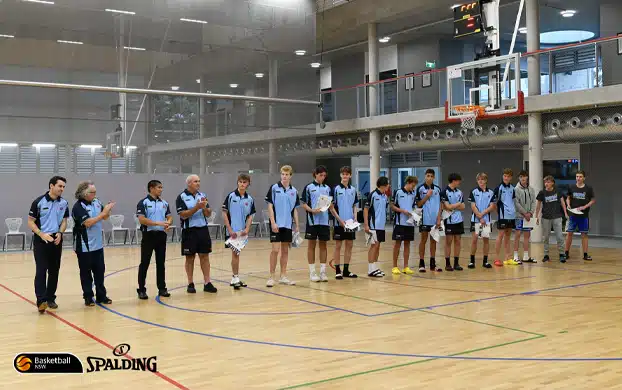
Barker College is a prestigious K-12 school in Sydney’s northern suburbs.
In the past, a scoreboard had one job: show the score. It was often a static piece of tin or a basic plug-in box mounted to a sports hall wall. But as Australian sporting hubs evolve into sophisticated, multi-use indoor stadiums and community precincts, the way we “keep track” has completely changed.
For architects, school boards, and local councils, specifying a scoreboard system is no longer just about the numbers—it’s about choosing a long-term, scalable community asset. Whether your venue is hosting a high-stakes Friday night basketball tournament, a Saturday morning netball match, or a school assembly, here is how to specify a scoring solution that serves every sport.
Indoor community halls and school stadiums rarely host just one sport. A single court might see an intense basketball game in the morning, a netball carnival in the afternoon, and a futsal or volleyball match under lights that evening.
When specifying a digital scoreboard, the “brain” of the system is just as important as the display. Look for systems that offer:
Instant Software Switching: The ability to shift layouts instantly—from basketball rules (with player fouls and team penalties) to netball or volleyball timing—at the press of a button.
Smart Controllers: Rather than an overly complicated, single-purpose console, look for intuitive, touch-screen controllers (like the SCOREPAD 2) that allow volunteers or teachers to manage multiple sports effortlessly.
A common mistake when designing a facility is specifying a basic scoreboard that the venue quickly outgrows. As clubs progress to higher levels of competition, their timing needs become stricter.
Add-On Modules: Ensure the chosen system is modular. You may only need a main scoreboard now, but can you easily integrate synchronised electronic shot clocks for basketball or player data extensions (showing individual player numbers and points) down the track?
Future-Proofing: Specifying a system built on open, scalable technology saves schools and councils from having to replace the entire unit when competition tiers upgrade.
Most school gymnasiums and community venues don’t have a dedicated AV technician on standby. The scoreboard will almost always be operated by a time-poor teacher, a student, or a club volunteer.
If a scoreboard system is too complex, it won’t get used properly. A well-specified system should be completely “plug-and-play” with a user-friendly visual interface, meaning someone can walk up to the controller and confidently run a game with less than five minutes of training.
Whether specifying for a bright outdoor oval or a brightly lit indoor stadium, visual clarity is non-negotiable.
Indoor Clarity: Inside a sports hall, scoreboards have to contend with high-intensity overhead stadium lights and reflection from polished timber floors. Look for high-contrast LED displays with wide viewing angles so spectators, coaches, and players can clearly read the board from anywhere in the stadium.
Outdoor Resilience: If your project is an outdoor field, ensure the display features automated brightness adjustments to counter the harsh glare of the midday Australian sun.
Modern electronic and LED displays are significant investments, but they also double as highly effective communication tools.
Sponsorship and Revenue: For local clubs, the ability to scroll through digital sponsor logos during breaks or halftime creates a high-visibility revenue stream that old-school boards simply couldn’t offer.
Community and School Messaging: When the stadium is being used for school assemblies, council community days, or major events, these displays can be used to broadcast notices, welcome messages, or multimedia presentations.
Specifying a scoreboard system is an investment in the overall venue experience. When you move beyond a basic clock, you are building a hub for your sporting community. By focusing on multi-sport versatility, ease of use, and future scalability, you ensure your facility remains a “best-in-class” venue for years to come.
When planning a facility upgrade or a new build, early integration is key. From mounting requirements in multi-purpose halls to synchronising shot clocks, getting the right layout depends entirely on your venue’s specific architectural plans.
A: Yes, particularly if your venue plans to host regional, state, or national level competitions. Standard community or school matches are relatively flexible, but sports like basketball (FIBA regulations) and netball have strict rules regarding game timers, the visibility of team fouls, synchronised horn sounds, and shot clock placements. When specifying a system, it is crucial to ensure the display software can be programmed to meet these specific official sporting codes.
A: Yes, provided you specify a modular system from the start. Many schools and community clubs operate on phased budgets. Choosing a scalable, future-proof platform allows you to install the main multi-sport scoreboard now, and then seamlessly integrate plug-and-play accessories—like synchronised electronic basketball shot clocks or advanced player data boards—down the line when additional funding becomes available.
A: Absolutely. While integrating a scoreboard during the early architectural design phase of a new build is ideal for planning structural supports, retrofitting older venues is incredibly common. Thanks to modern wireless technology, today’s controllers can connect to displays without the need to tear up floors or walls to run extensive data cables. The main requirements for a retrofit are ensuring the existing wall or support structure can handle the weight, and that a standard local power supply is accessible.

Barker College is a prestigious K-12 school in Sydney’s northern suburbs.
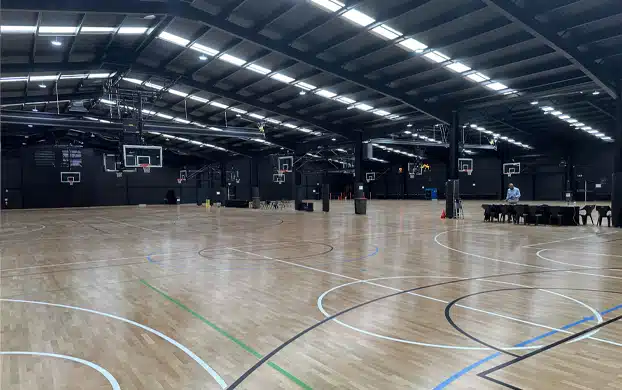

RMA was excited to help with the establishment of the new facility for the Camellia Wolves.

Over the years, RMA has been involved in 5 Pacific Games, the event that connects the best sports people from Pacific island nations together in a festival of sport.
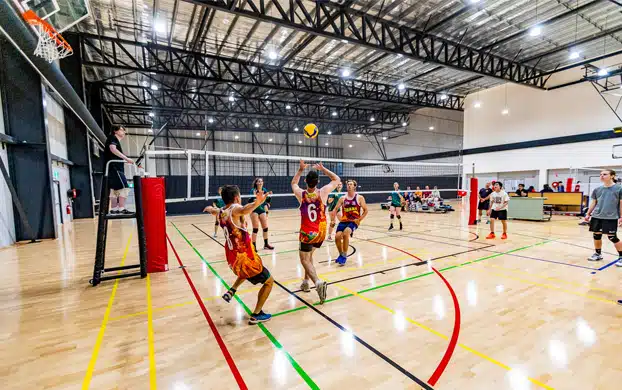
RMA’s involvement in new builds starts early, in quantity surveying or early design. We work with the designers and other stakeholders to determine the profile of the new facility.
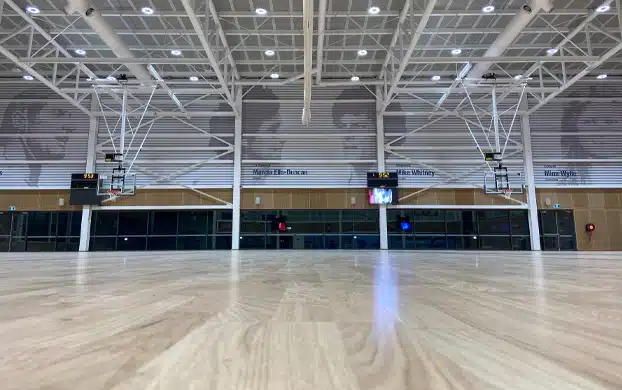
RMA works hard to support local government authorities with all their indoor and outdoor sports infrastructure requirements.
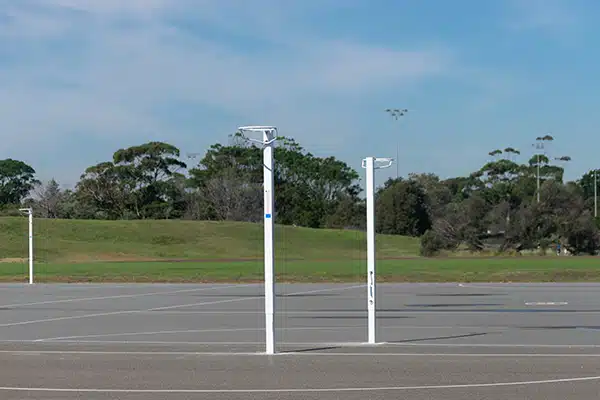
Over the years RMA has worked with hundreds of architects on hundreds of projects all across the Pacific.